

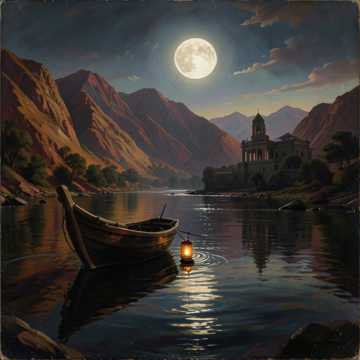
心上的月光
歌词
【前奏】(古筝引子,笛声远远进来)
[Intro: Open with solo guzheng in free time, one low falling phrase with the left hand pressing the string and no pulse. Let a distant bamboo flute answer once from far back in a long hall reverb, then stop. Hold three full seconds of silence with only room tone, and leave the guzheng tail ringing under the soprano's first breath.]
【主歌 A1】
[Verse A1: Enter with a mezzo-voce soprano, rounded and steady, keeping the legato line unbroken and the consonants crisp so every word stays intelligible. Do not sob here; hold the tone pure and let the phrase settle with a soft fall. Guzheng arpeggios support the lower register, piano places one sustained chord between lines, and no erhu appears yet. Keep the dynamic modest, breathe before the third line, and let the piano decay prepare Verse A2.]
丹霞赤壁
晨光把山色点亮
北江一路
把岁月轻轻摇荡
渡船的桨
划过谁的回望
水面倒影里
一座城在生长
【主歌 A2】
[Verse A2: Begin in slightly fuller resonance without adding edge; link each line to the next and preserve the -ang endings instead of swallowing them. Let the first restrained sob appear on the word about panic, a small catch that closes the throat for one beat, then release it. Erhu enters below with long bowed lines, piano moves to block chords, guzheng ornaments lightly, and let the piano answer under the sob. Sustain the final vowel, leave one beat of silence before the last line, and hand the phrase to the chorus.]
珠玑巷深
藏着千年前的行囊
南来的脚步
在此变成家乡
曹溪一脉
菩提本无树的清凉
南华钟声
敲醒多少红尘的慌
【副歌】
[Chorus: Open into full resonance on the eight lines, carrying them as two long arcs of four rather than eight separate phrases, and keep the vibrato even instead of widening it. Strike the three-character openings clearly, then let each arc bloom toward its ending. Guzheng moves to tremolo, flute answers between arcs, erhu sustains underneath, piano doubles the bass in octaves. Hold the moon image on a long tone with a single tearful catch, then reduce to piano before the bridge instead of pushing louder.]
丹霞红
是落日盖的印章
珠玑巷
是祖辈说的远方
北江水
流不尽人间沧桑
这座城
是我心上的月光
南华寺
木鱼敲醒的晨光
梅关雪
落在唐宋的诗行
我把韶关
写成一确词章
等你来
读这千年的模样
【桥段】
[Bridge: Remove guzheng, flute and erhu so only piano and soprano remain, and pull the voice back to half sound, singing the question almost as speech. Articulate the word for hometown slowly, break the breath after the words for not knowing, and let the sob sit openly there for one beat before recovering the tone. Keep the range low, hold the last syllable of each line, let the piano answer with one low chord, then open the final phrase upward as the piano thickens into octaves. Add no harmony and end on the mountain image with one guzheng sweep.]
你问我
乡愁是什么形状
是珠玑的灯
还是北江的浪
我答不上
只把山歌轻轻唱
唱到月亮
升上 nán 岭的山岗
【副歌·重复】
[Chorus: Return at the fullest resonance of the song, adding a second soprano harmony that enters only on the final two lines, dignified rather than dramatic. Sing the four lines with longer vowels and a clear breath before each entry. Widen the guzheng tremolo, double the flute an octave above, fill the middle with erhu, and anchor the bottom with wide piano octaves. Extend the final word with a fading sob, then cut all instruments together and leave silence before the outro.]
丹霞红
是落日盖的印章
珠玑巷
是祖辈说的远方
北江水
流不尽人间沧桑
这座城
是我心上的月光
南华寺
木鱼敲醒的晨光
梅关雪
落在唐宋的诗行
我把韶关
写成一确词章
等你来
读这千年的模样
【尾句】(转弱,只剩古筝)
[Outro: Drop to solo guzheng and sing the last line in half voice, letting the tone thin out rather than swell. Articulate the three characters slowly, hold the word for moonlight, and allow one open sob on the final syllable without vibrato or flourish. Keep the guzheng sparse, leave a long gap before the last note, then let the voice stop and the guzheng low string decay into the hall reverb. End without resolving the chord.]
(轻声)这座城
是我心上的月光——